
Visible patches
Speckles, irregular spots, fuzzy growth, or staining on drywall, wood, ceiling tiles, grout, and stored belongings. Growth can look black, gray, green, white, or other colors.
Licensed mold assessment
Mold can be obvious, hidden behind a wall, or confused with an ordinary stain. An assessment helps you understand where moisture is coming from and what work, if any, is needed.
First signs
Follow the moisture, especially after a leak or a period of high humidity. These signs deserve a closer look, whether or not you can see mold yet.
Speckles, irregular spots, fuzzy growth, or staining on drywall, wood, ceiling tiles, grout, and stored belongings. Growth can look black, gray, green, white, or other colors.
An odor in a closet, basement, cabinet, or room may point to moisture or growth in a place you cannot see.
Ceiling rings, peeling paint, swollen baseboards, condensation, recurring leaks, wet carpet, or dampness near a foundation can signal conditions that support mold.
Under sinks, behind or beside plumbing fixtures, around windows, beneath air-conditioning units, in basements, and near previous roof or foundation leaks.
A photo or color cannot tell you the mold species or whether an area is safe. Some marks are not mold at all. An assessor evaluates the conditions and determines whether further investigation is appropriate.
Real-world examples
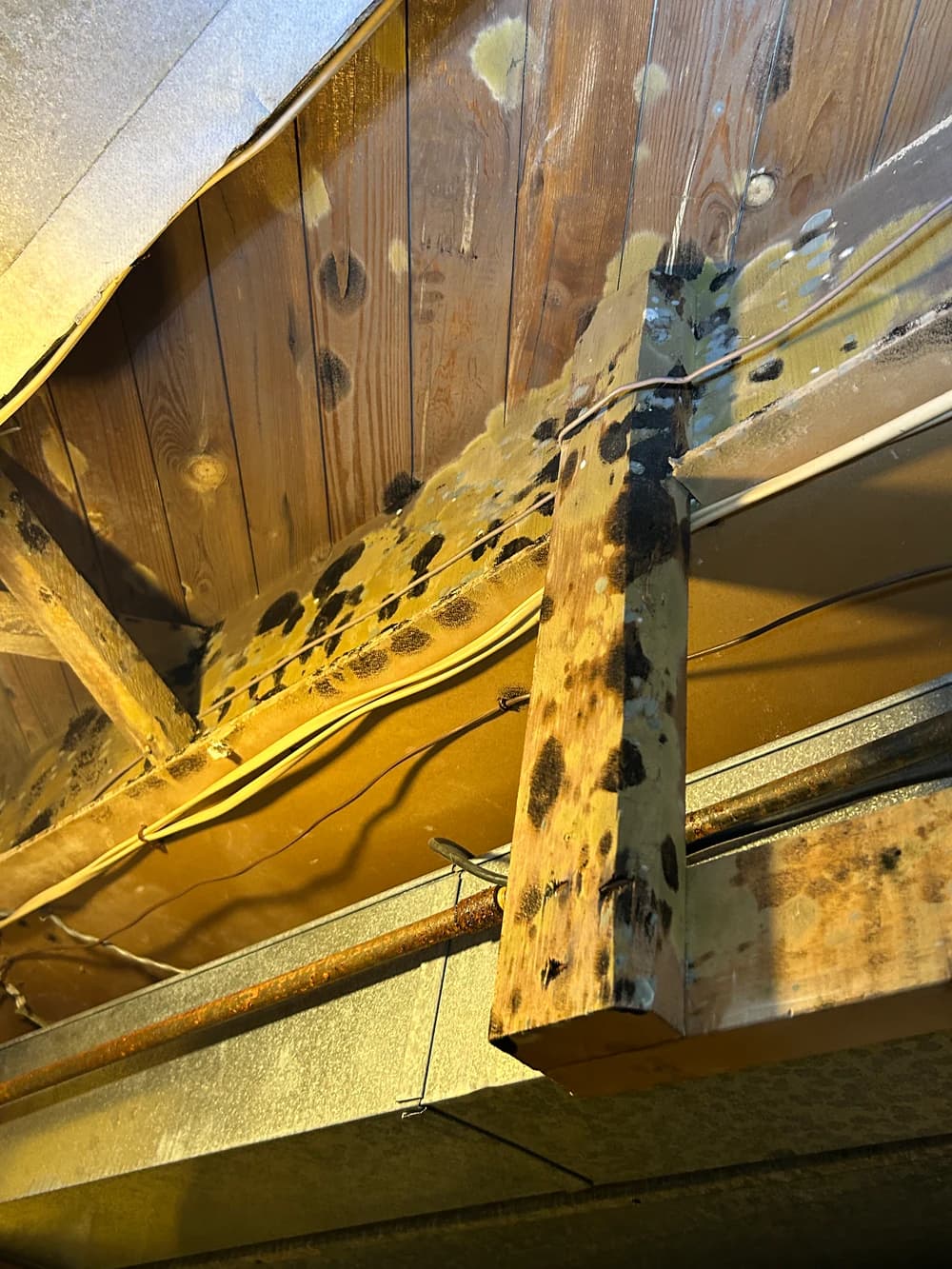
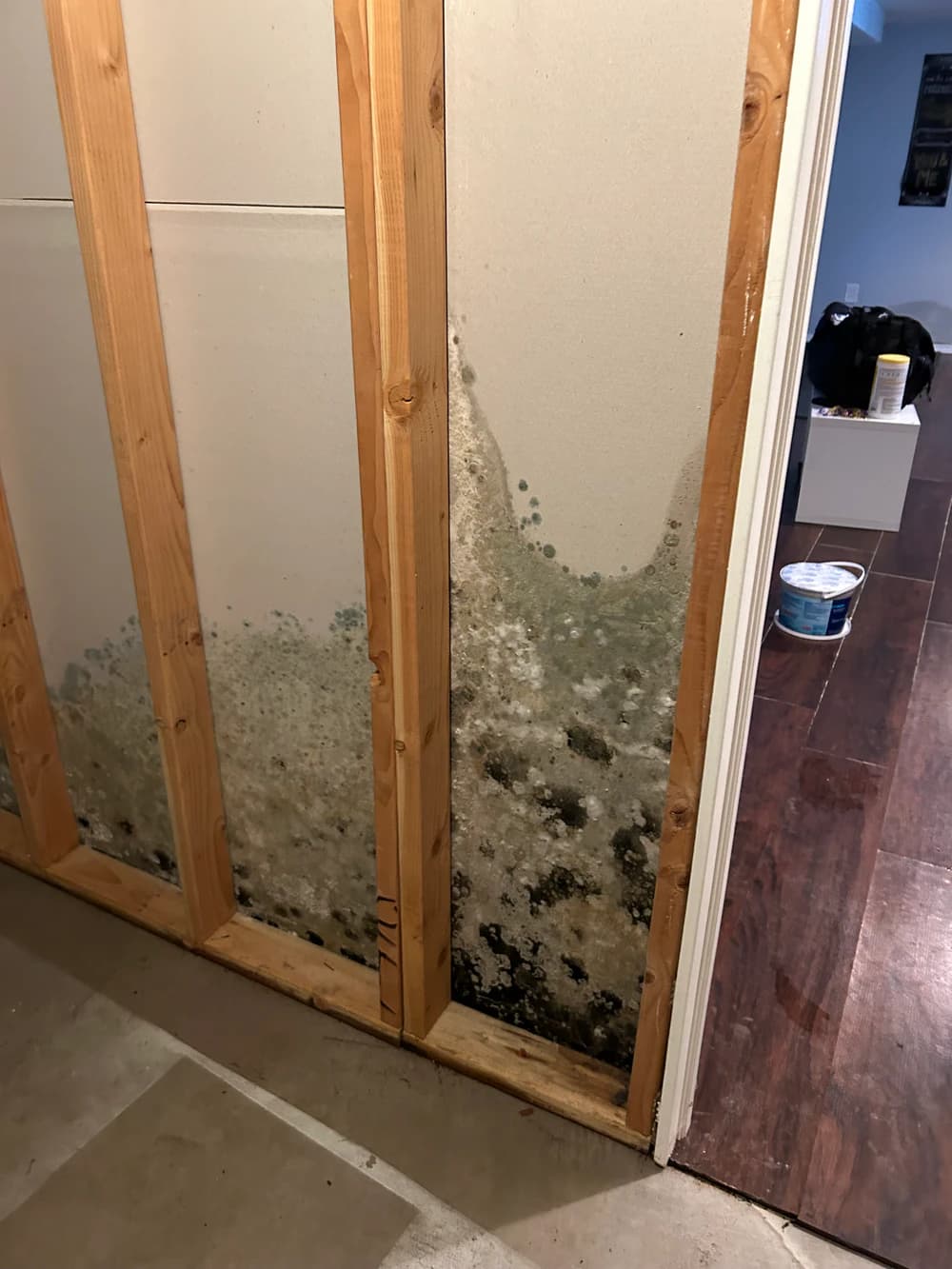
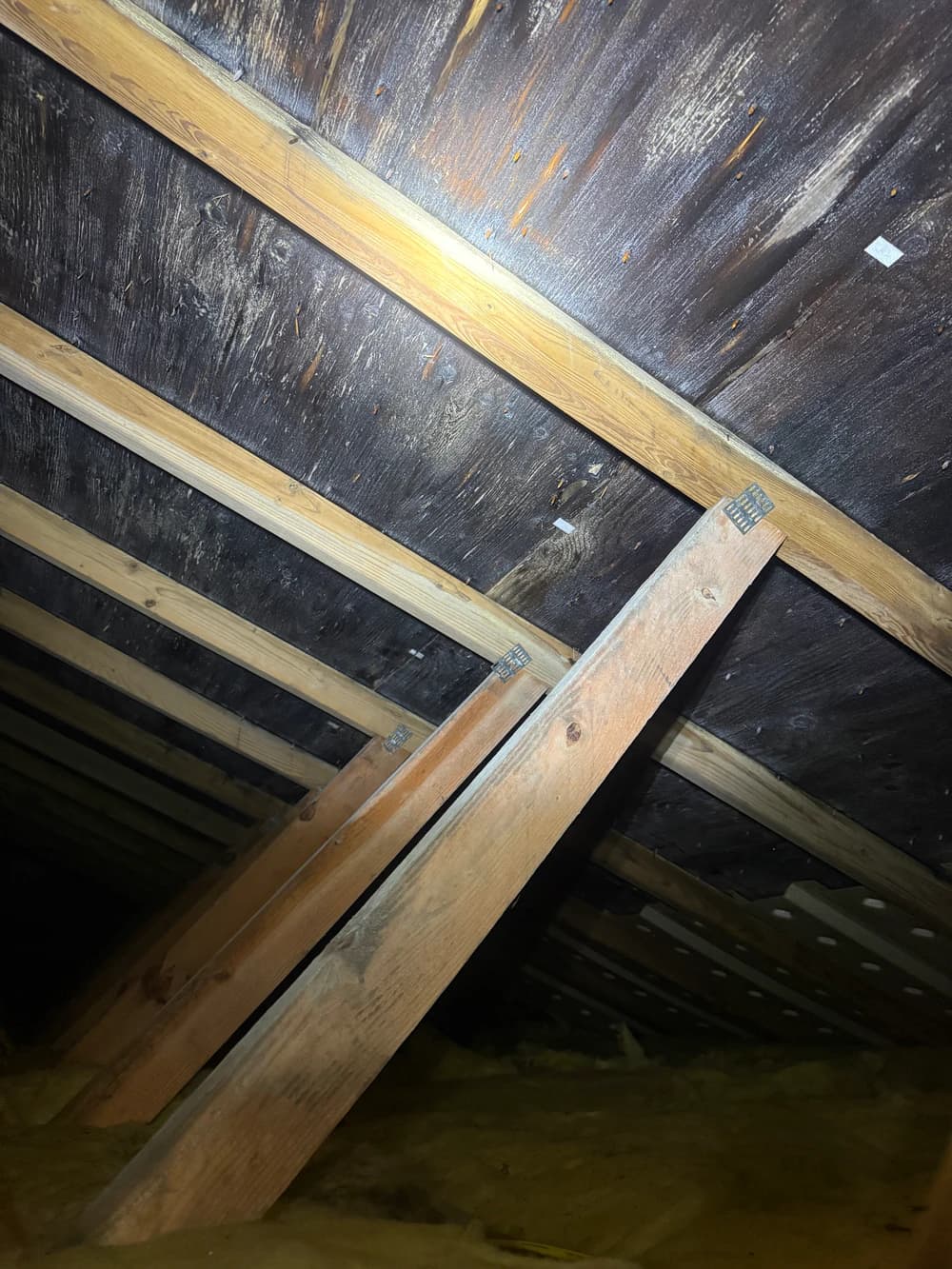
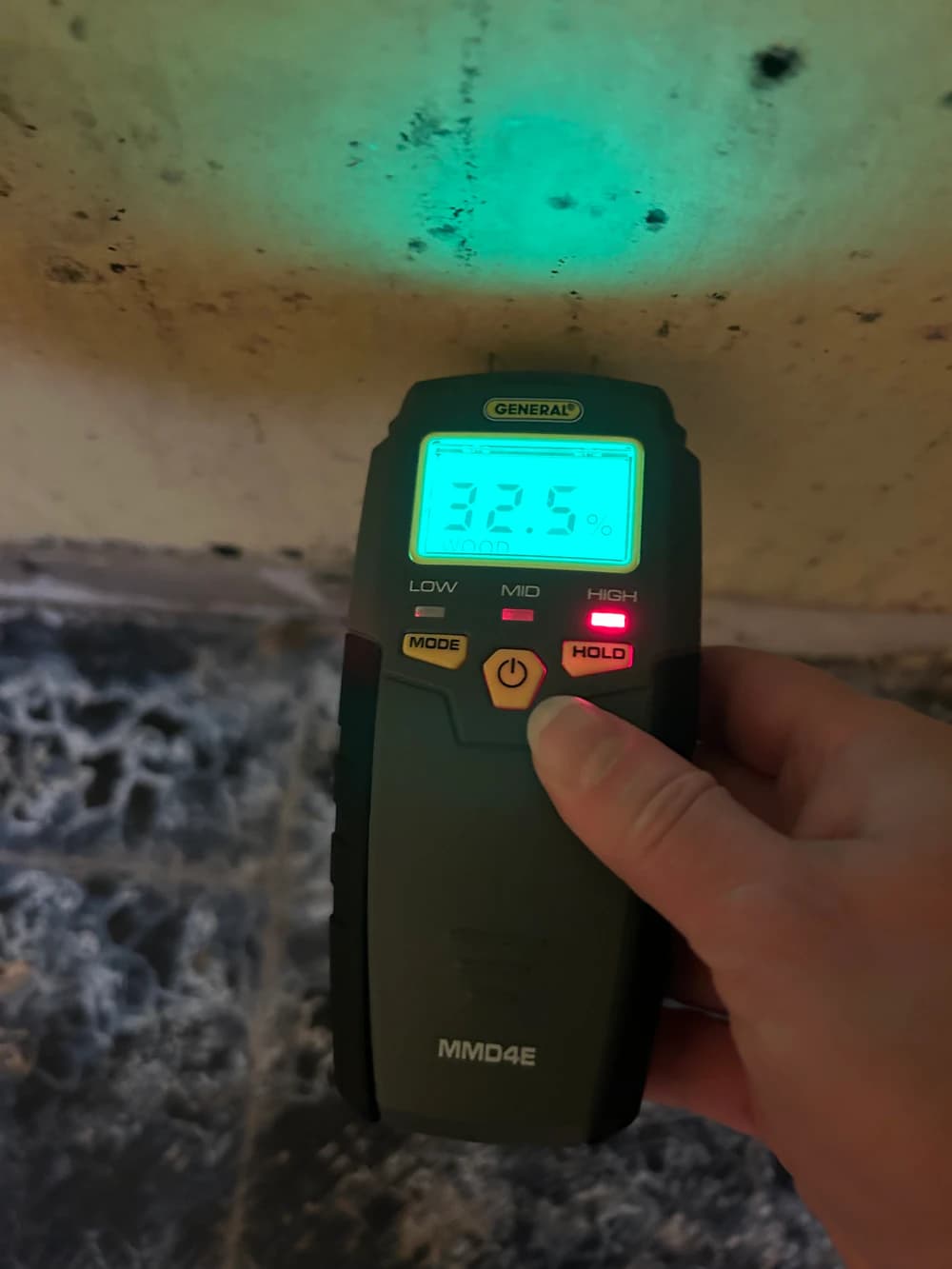
Growth can turn up low on a wall, high in an attic, or only show itself through damp materials. These photos are examples for recognizing a possible concern, not a way to identify a species from a picture.
From question to clearance
Each step has a clear owner, so you know who is evaluating the problem, who is fixing it, and how the result is confirmed.
Why two distinct roles?
Under New York Labor Law Article 32, Section 936, a licensee cannot perform both the mold assessment and mold remediation on the same property. The law also prohibits a person from owning an interest in both licensees doing those two jobs on that property.
In practical terms, the assessor identifies and documents the concern and sets out a remediation plan. A separate remediation contractor performs the cleanup. This separation keeps the evaluation and the cleanup in distinct hands.
Read NY Labor Law § 936Common questions
Further reading
No. Mold comes in many colors, and “black mold” is not a species name. A photo cannot tell whether a mold is producing toxins. What matters first is the growth and the moisture feeding it.
Not necessarily. New York's Department of Labor says sampling is rarely recommended as a routine first step; visual inspection and finding the moisture source often provide more useful direction. An assessor can explain when sampling would answer a specific question.
Note when and where you notice it and look for leaks, condensation, water stains, or damp materials. An assessment can help locate the moisture source and determine whether further investigation is needed.
No. Linnea's role is assessment and the remediation plan; a separate licensed remediation contractor performs the removal or cleaning when needed.
Your next step
Describe what you are seeing or smelling and where. Linnea can explain whether an assessment makes sense and what it would cover.
Ask Linnea About an Assessment